On
16 April 2026,
SIERA hosted a webinar focused on one of the most pressing topics in the built environment today: the
energy transition in logistics real estate. As the sector faces growing decarbonization pressure, the session provided a practical look at how logistics assets can be transformed through technically sound, site-specific, and forward-looking energy strategies.
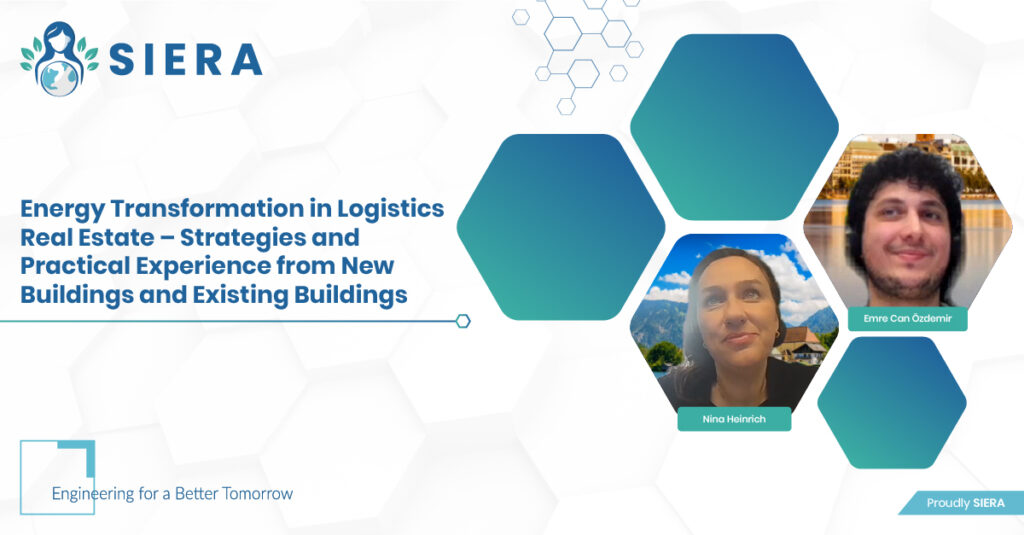
Led by
Emre Can Özdemir, the webinar explored how companies can approach decarbonization in logistics properties despite common barriers such as
fragmented data, infrastructure limitations, and the operational complexity of occupied or actively used sites. Rather than focusing on theory alone, the discussion centered on how stakeholders can build a realistic pathway from initial assessment to implementation.
Why the Energy Transition in Logistics Real Estate Matters
Logistics real estate plays a critical role in modern supply chains, but it also represents a major area of opportunity when it comes to improving energy performance and reducing emissions. Warehouses, distribution centers, and other logistics facilities often have large roof areas, significant operational energy needs, and varying levels of technical maturity across portfolios. This makes them highly relevant for integrated decarbonization strategies.
At the same time, the pressure to act is increasing. Investors, occupiers, and regulators are all placing greater emphasis on energy efficiency, renewable energy integration, and long-term asset resilience. As a result, energy transformation is becoming not just an environmental objective, but also a strategic factor in asset value, operational continuity, and future compliance.
The webinar addressed this changing landscape and highlighted the importance of approaching logistics real estate with a combination of
technical diligence, strategic planning, and realistic implementation steps.
Webinar Focus: From Pressure to Practical Action
A central question framed the webinar:
How can the decarbonization of logistics real estate be implemented in a technically robust way, despite data gaps, infrastructure bottlenecks, and ongoing operations?
To answer this, the session examined both
new-build opportunities and the
transformation of existing buildings, showing that while the starting points may differ, both require structured technical evaluation and early alignment between energy goals and real-world feasibility.
Key Topics Covered in the Webinar
The webinar was structured around five main topic areas that together outlined a practical transformation pathway.
1. Transformation Pressure and Opportunities in Logistics Real Estate
The session began with a look at the broader transformation pressure affecting logistics assets. Decarbonization requirements are intensifying across the real estate sector, and logistics properties are no exception. Beyond compliance, there is a growing recognition that energy transformation can also create operational and strategic benefits, especially when linked to long-term asset performance and resilience.
The webinar emphasized that this shift should not be viewed only as a challenge. It also presents an opportunity to rethink how logistics buildings are planned, assessed, and upgraded in a way that aligns technical systems with future energy demands.
2. New Builds as an Opportunity for Integrated Energy Concepts
One of the strongest messages from the webinar was that
new developments offer a valuable opportunity to integrate renewable energy systems early in the planning process. When energy concepts are considered from the outset, rather than added later, project teams can evaluate technical options more effectively and align building design with future operational goals.
The webinar pointed to the importance of assessing whether a site is suitable for renewable energy solutions at an early stage. This kind of proactive approach supports better design coordination, reduces the risk of missed opportunities, and creates a stronger basis for integrated energy supply concepts.
3. Systematic Technical Assessment of Existing Buildings
For existing logistics buildings, the starting point is often much more complex. The session highlighted that technical and infrastructure data across established portfolios is frequently
fragmented, inconsistent, or incomplete. This can make it difficult to assess what systems are installed, where limitations exist, and which transformation measures are realistic.
A key takeaway was that existing assets need a
structured technical assessment before meaningful decarbonization decisions can be made. Site visits, visual documentation, and the description of installed energy systems all play an important role in establishing a reliable baseline. Without this level of clarity, transformation planning risks being based on assumptions rather than evidence.
4. From Baseline Assessment to Site-Specific Feasibility
Once the current technical condition is understood, the next step is to move beyond general asset information and toward
site-specific feasibility analysis. Emre Can Özdemir explained that this transition is essential because every logistics site has its own infrastructure characteristics, energy needs, and transformation potential.
The webinar showed how technical review processes can help identify:
- Infrastructure reserves
- Existing bottlenecks
- Priority areas for intervention
- Sites that require deeper technical analysis
This step enables organizations to distinguish between high-level portfolio assumptions and the realities of implementation at the individual asset level.
5. Building a Practical Pathway Toward Implementation
The final thematic focus of the webinar was how these assessments can support actual implementation planning. Decarbonization strategies are most effective when they are grounded in technical feasibility, clear system boundaries, and realistic site conditions. The session underlined that successful transformation depends on moving in a structured way from assessment to prioritization and then toward technically viable measures.
Main Insights from the Session
Early energy planning creates stronger long-term outcomes
For new logistics developments, one of the clearest insights was the importance of integrating energy considerations early. If renewable energy systems are evaluated at the start of the planning process, they can become part of the building’s overall concept rather than an isolated technical addition later on. This leads to better coordination, more informed decision-making, and stronger long-term performance.
Existing assets require technical transparency before transformation
In existing buildings, the pathway begins with understanding what is already there. Technical transformation cannot happen effectively if the current infrastructure is only partially documented or poorly understood. The webinar reinforced the value of building a clear and structured picture of the current asset condition before defining future measures.
Data quality directly affects implementation readiness
Another important theme was the impact of data quality. Where infrastructure information is fragmented, decision-making becomes slower and less reliable. A systematic technical assessment helps close this gap by providing a clearer basis for evaluating feasibility and prioritizing next steps.
Portfolio strategy must be matched with local feasibility
The webinar also made it clear that portfolio-wide transformation goals need to be tested against
site-level realities. A strategy may look promising at a high level, but implementation depends on local infrastructure conditions, technical constraints, and the specific characteristics of each property.
Decarbonization is a technical and strategic process
The session ultimately positioned decarbonization as more than a sustainability initiative. It is a process that combines engineering insight, infrastructure understanding, and strategic planning. For logistics real estate, that means success depends on bringing technical detail and long-term business considerations together.
Speaker Highlight
Emre Can Özdemir shared valuable perspectives on how logistics real estate stakeholders can approach energy transformation with greater technical confidence. His contribution focused on bridging the gap between high-level decarbonization ambitions and the realities of implementation in both
new-build projects and existing asset portfolios.
By focusing on practical assessment steps and infrastructure-based decision-making, the session offered a grounded and actionable view of what energy transformation in logistics real estate requires.
Final Takeaway
The webinar made one message especially clear:
the decarbonization of logistics real estate requires more than ambition — it requires structure, technical understanding, and site-specific feasibility.
Whether the starting point is a new development or an existing logistics asset, meaningful progress depends on understanding the building, the installed systems, and the local infrastructure conditions that shape what is actually possible. A successful energy transition does not begin with assumptions; it begins with technical clarity.
For companies seeking to future-proof their logistics portfolios, the path forward lies in combining
early planning, systematic assessment, and realistic implementation strategies. That is how decarbonization moves from concept to action.
Missed the Webinar?
If you would like to learn more about
SIERA’swork in renewable energy systems, sustainable building infrastructure, and decarbonization strategies, visit
SIERA.
You can also follow
SIERA on
LinkedIn for updates on future webinars and industry insights.
Ready to accelerate the energy transition of your logistics assets?
Whether you are evaluating new developments or planning the transformation of existing buildings,
SIERA helps turn technical complexity into clear, actionable strategies.
Get in touch with our team to explore how site-specific assessments and integrated energy concepts can support your decarbonization goals.
Engineering For a Better Tomorrow

 EN
EN  DE
DE