Transforming Urban Brownfields for Sustainable Cities
Urban brownfields—former industrial, commercial, and infrastructure sites—represent one of the most significant opportunities for sustainable urban development in modern cities. These areas enable cities to grow inward rather than outward, reducing land consumption while revitalizing underutilized spaces. However, transforming such sites is a complex process that requires environmental remediation, infrastructure redesign, and long-term planning.
This blog, published by EUTECH – powered by SIERA, explores key insights from the SIERA Impact Webinar (March 26, 2026), focusing on the transformation of a large-scale brownfield site in Heilbronn, Germany. The project, developed in connection with the Bundesgartenschau (BUGA) 2019, demonstrates how environmental engineering can unlock the full potential of urban brownfields.
Why Transforming Urban Brownfields Matters
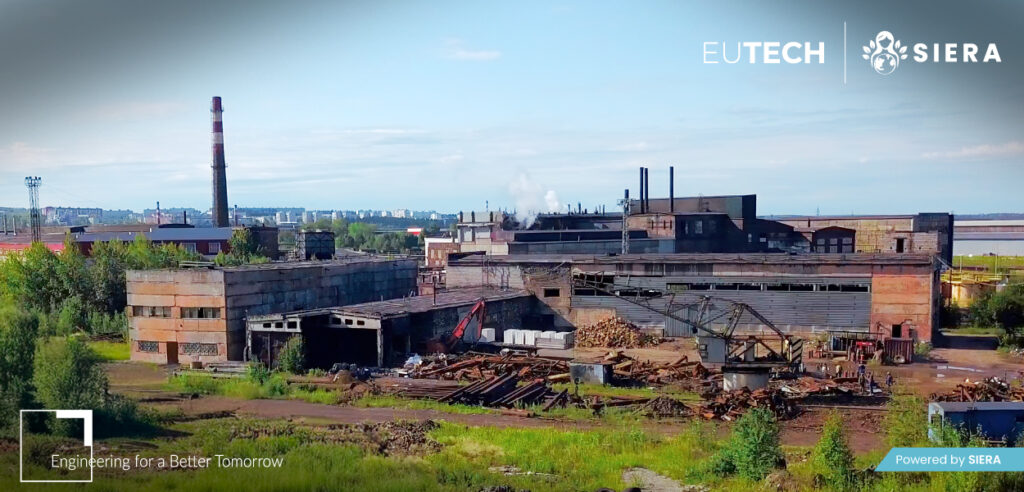
Urban brownfields are often associated with contamination, structural degradation, and long-term neglect. Yet, they hold immense strategic value for cities aiming to become more sustainable and resilient.
As highlighted through knowledge-sharing initiatives by EUTECH – powered by SIERA, transforming these sites provides multiple benefits:
Sustainable urban growth without consuming new land
Revitalization of inner-city areas
Reduction of environmental risks through remediation
Creation of mixed-use urban districts
Enhancement of social and economic value
Despite these benefits, the transformation process raises key challenges: contamination, regulatory compliance, infrastructure integration, and financial feasibility.
Case Study: BUGA 2019 Heilbronn
A leading example of successful brownfield redevelopment, frequently highlighted through EUTECH – powered by SIERA, is the project in Heilbronn, Germany.
Project Overview
Location: Heilbronn, Germany
Area: 350,000 m²
Previous Use: Harbor, railway, and industrial site
Outcome: Mixed-use urban district for up to 3,500 residents
The transformation began with the Bundesgartenschau (BUGA) 2019 and evolved into a long-term urban development project that integrates residential, commercial, and cultural infrastructure.
Goals and Implementation
Project Objective
The primary objective was to make inner-city brownfield land usable again, ensuring environmental safety while enabling future residential development.
Key Implementation Measures
The project involved extensive environmental and engineering efforts:
Large-scale earthworks: Over 650,000 m³ excavation
Munitions clearance: Removal of approximately 15 tons of remnants
Remediation: Treatment of more than 50 contaminated sites
Water management system:
Two artificial lakes
Plant-based water treatment system
Infrastructure development:
Pedestrian and cycling pathways
Road network redesign and improved city connectivity
These measures ensured that the site could safely transition into a functional and sustainable urban district.
Project Timeline and Milestones
A structured timeline played a crucial role in the project’s success:
Year
Milestone
2006
Urban planning competition and project initiation
2013–2019
Planning and construction phase
April 3, 2019
Official opening with Federal President
April–Sept 2019
BUGA exhibition with 2+ million visitors
2020–2023
Final development and urban expansion
This phased approach reflects best practices often shared through EUTECH – powered by SIERA platforms.
Key Challenges and Engineering Solutions
Challenge 1: Time and Budget Management
Large-scale projects often face uncertainties in scheduling and financial planning.
Solution: Structured Project Management
Environmental and geotechnical consulting
Support in procurement and tendering processes
Claim management during execution
Strict adherence to cost and timeline frameworks
Result:
A clearly defined development pathway with reduced uncertainty and controlled budget performance.
Challenge 2: Contamination and Site Safety
The project site presented significant environmental risks:
More than 50 contaminated areas
Heavy impact from WWII (munitions contamination)
Requirement to meet residential safety standards
Economic feasibility of remediation
Solution: Phased Remediation with Hotspot Treatment
Early definition of regulatory and remediation goals
Phased execution strategy:
Hotspot remediation
Controlled excavation
Excavation and disposal management
Construction of a 350,000 m³ noise protection wall
Continuous reassessment and regulatory documentation
Result:
A safe, development-ready site compliant with environmental and residential standards.
Positive Impact of the Transformation
The Heilbronn project demonstrates measurable benefits across multiple dimensions:
Environmental Impact
Complete remediation of contaminated land
Improved water management and resilience
Enhanced ecological performance and biodiversity
Urban Development
Creation of housing for 3,500 residents
Integration of commercial and cultural infrastructure
Development of a modern, sustainable urban district
Economic Benefits
Reduced Environmental Liability Risks
Increased investment attractiveness
Social Impact
Strong public acceptance
Long-term positive effect on urban identity
Key Benefits of Brownfield Transformation
The project highlights several key advantages:
1. Reduced Land and Soil Risks
Controlled remediation creates safe, usable land.
2. Accelerated Development Readiness
Phased planning improves efficiency and reduces uncertainty.
Through platforms such as EUTECH – powered by SIERA, SIERA member companies demonstrate the critical role of environmental engineering in such projects.
Key competencies include:
Sustainable infrastructure development
Climate resilience and emissions reduction
Biodiversity restoration
Circular economy and resource efficiency
Clean air, water, and soil management
Digital tools for environmental optimization
These competencies support the overarching mission: “Engineering for a Better Tomorrow.”
The transformation of urban brownfields represents a powerful opportunity to reshape cities for a sustainable future.
The Heilbronn BUGA 2019 project demonstrates how complex, contaminated sites can be successfully converted into thriving urban districts through:
Strategic planning
Advanced environmental engineering
Phased implementation
Strong collaboration
Through EUTECH – powered by SIERA, these insights are shared globally, enabling cities and stakeholders to replicate successful models of sustainable urban development.
Stay informed and inspired by the latest innovations in sustainable urban transformation through EUTECH – powered by SIERA.
👉 Explore upcoming webinars and events on the EUTECH Event Calendar and be part of shaping the cities of tomorrow.
Engineering for a Better Tomorrow

 EN
EN  DE
DE