 EN
EN  DE
DE 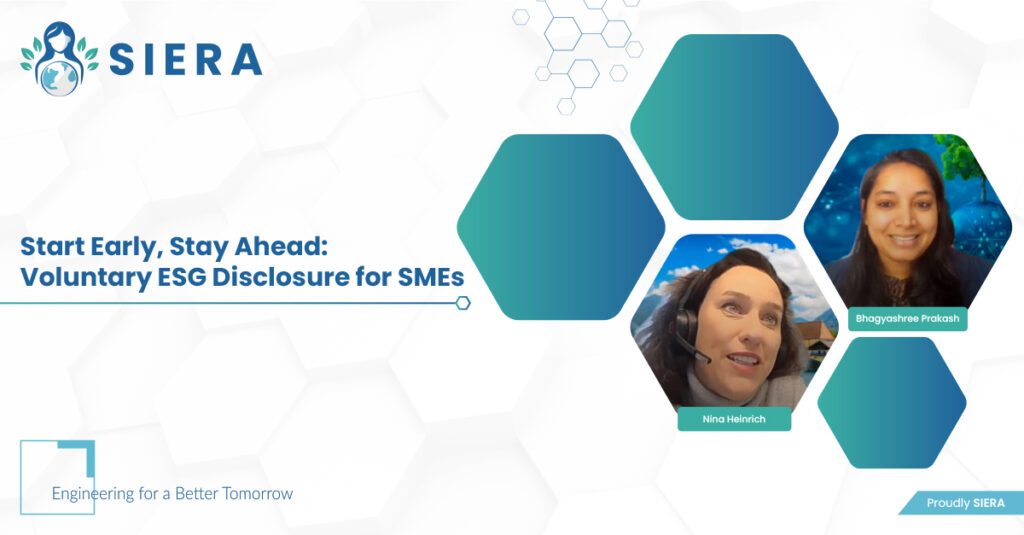
Voluntary ESG Disclosure for SMEs: Turning Complexity into Capability
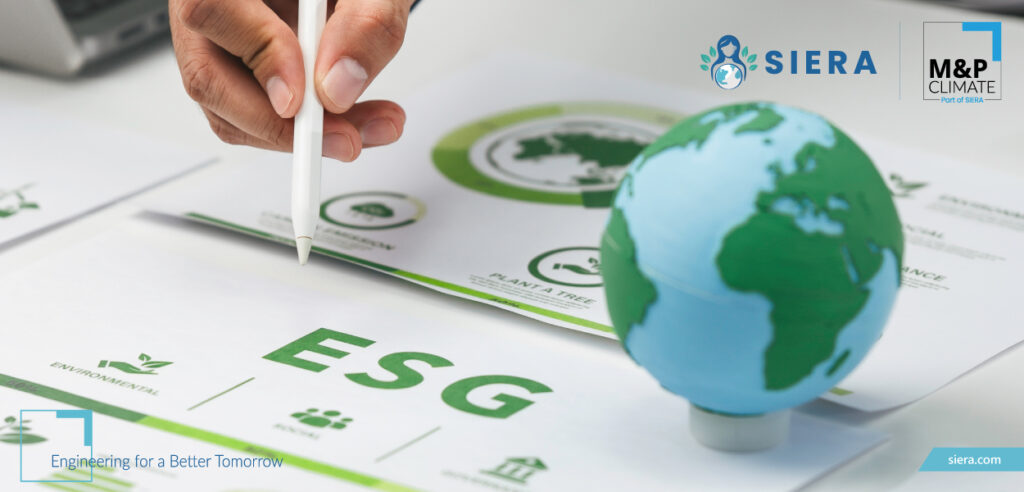
Environmental, Social, and Governance (ESG) disclosure is no longer a topic reserved for large corporations. Increasingly, small and medium-sized enterprises (SMEs) face growing expectations from customers, lenders, supply chain partners, and regulators to provide credible ESG information.
The SIERA Alliance, a global network of environmental engineering and sustainability experts working under the principle “Engineering for a Better Tomorrow,” supports organizations in transforming complex sustainability challenges into structured and actionable strategies. Through initiatives such as the SIERA Impact Webinar series, experts of the SIERA Alliance regularly share practical insights on ESG governance, digital sustainability systems, and environmental engineering solutions.
One of the most important questions organizations face today is:
How can SMEs deliver credible ESG disclosure quickly and consistently without building a large ESG team or becoming overwhelmed by spreadsheets and fragmented data?
The answer lies in transforming ESG reporting from an ad-hoc compliance exercise into a structured organizational capability.
Why ESG Disclosure Matters for SMEs Today
Even companies outside mandatory reporting frameworks are increasingly expected to provide ESG data. Stakeholder expectations are expanding rapidly, and many SMEs already receive detailed ESG questionnaires from customers, investors, and business partners.
Several trends are driving this shift:
- Rising stakeholder pressure: Supply chains, financial institutions, and procurement processes increasingly require ESG transparency.
- Expanding disclosure expectations: Stakeholders now request not only policies but also measurable performance indicators, targets, and improvement plans.
- Demand for credible and traceable data: ESG claims must be supported by verifiable information and consistent methodologies.
- Continuous reporting expectations: ESG disclosure is evolving from an annual exercise into an ongoing operational capability.
For many SMEs, these developments introduce new operational and strategic challenges. Without structured processes and digital infrastructure, ESG reporting can quickly become fragmented and difficult to maintain.
The SIERA Alliance emphasizes that effective ESG governance requires integrated engineering expertise, clear governance structures, and reliable data systems.
Key ESG Reporting Challenges for SMEs
Organizations beginning their ESG journey often encounter several structural barriers. These challenges are common across sectors and regions.
- Fragmented ESG Questionnaires
Many SMEs receive repeated ESG questionnaires from customers, lenders, and partners. These questionnaires often ask similar questions but in different formats and with different reporting deadlines.
Without a centralized ESG framework:
- Teams respond independently.
- Data and narratives vary across submissions.
- Stakeholders request additional clarification.
- Procurement or financing processes slow down.
As a result, companies remain reactive instead of building a structured ESG communication strategy.
- Manual and Scattered Data Collection
ESG information is typically distributed across multiple departments, including:
- Finance
- Operations
- Procurement
- Human resources
- Supply chain partners
When ESG reporting relies heavily on spreadsheets and email communication, organizations face several challenges:
- Manual consolidation of data
- Version control issues
- Late-stage corrections and inconsistencies
- Weak documentation of methodologies
These issues reduce confidence in reported figures and make it difficult to explain the origin of sustainability metrics during stakeholder reviews.
- Unclear Material Priorities
Another common challenge is identifying which ESG topics are most relevant to the organization.
Without a structured prioritization process:
- Reporting becomes overly broad and inefficient.
- Internal teams focus on different sustainability topics.
- Stakeholders receive inconsistent ESG messaging.
A lack of clear material priorities can weaken the credibility of ESG communication and reduce its strategic value.
- One-Time Reporting with Limited Visibility
In many organizations, ESG reporting is still treated as a once-a-year activity rather than a continuous management process.
This approach limits the ability to:
- Track sustainability performance over time
- Identify operational improvements
- Communicate progress effectively to stakeholders
Without ongoing monitoring and structured reporting systems, ESG remains disconnected from operational decision-making.
Transforming ESG Reporting into a Strategic Capability
Addressing these challenges requires more than simply producing a sustainability report. It requires building a repeatable governance system supported by digital infrastructure and structured processes.
By implementing integrated ESG management frameworks, SMEs can transform fragmented reporting practices into credible, efficient, and scalable disclosure systems.
Within the SIERA ecosystem, digital sustainability tools and integrated environmental engineering expertise help organizations structure ESG processes and maintain reliable reporting workflows.
Practical Solutions for Structured ESG Disclosure
Organizations that successfully manage ESG disclosure typically implement several core capabilities.
| ESG Challenge | Structured Approach | Strategic Benefit |
| Fragmented ESG questionnaires | Standardized ESG disclosure framework | Consistent stakeholder responses |
| Manual data collection | Structured ESG data workflows | Reliable and traceable sustainability data |
| Unclear ESG priorities | Materiality assessment processes | Focused sustainability strategy |
| One-time reporting | Continuous ESG performance monitoring | Transparent progress communication |
These capabilities allow organizations to transition from reactive reporting to proactive sustainability governance.
Building a Standardized ESG Disclosure Baseline
A standardized ESG disclosure framework creates a centralized narrative and dataset that can be used to respond to stakeholder requests.
Instead of rewriting answers for every questionnaire, organizations can rely on an approved disclosure baseline.
This approach enables:
- Consistent messaging across stakeholders
- Faster responses to ESG data requests
- Leadership-aligned sustainability narratives
- Reduced duplication of work
By maintaining a single source of truth, organizations significantly reduce the operational burden of ESG disclosure.
Structuring ESG Data Collection
Reliable ESG disclosure depends on reliable data.
Structured ESG data collection systems allow organizations to define:
- Clear ownership for ESG metrics
- Regular reporting cycles
- Validation processes for data quality
Replacing scattered spreadsheets with structured workflows improves data consistency and strengthens the credibility of sustainability disclosures.
This transformation is particularly important as ESG information increasingly becomes subject to audit and assurance requirements.
Establishing Clear ESG Priorities
A structured double materiality assessment (DMA) enables organizations to evaluate sustainability topics based on both impact and financial relevance.
Through this process, organizations can identify the ESG topics most critical to their business and stakeholders.
The results of a materiality assessment provide a clear foundation for:
- Defining ESG key performance indicators
- Assigning internal responsibilities
- Aligning sustainability communication
A well-structured prioritization process ensures that ESG reporting remains focused, credible, and aligned with business strategy.
Tracking ESG Performance Over Time
ESG disclosure becomes far more valuable when it supports continuous monitoring of sustainability performance.
Tracking environmental indicators—such as greenhouse gas emissions—allows organizations to understand trends, identify hotspots, and demonstrate measurable progress.
When combined with materiality frameworks and structured dashboards, companies gain the ability to communicate ESG progress transparently and consistently.
This continuous visibility transforms ESG from a reporting requirement into a strategic management capability.
The Benefits of Structured ESG Governance
Organizations that implement structured ESG reporting frameworks experience several tangible advantages.
Faster Stakeholder Responses
Standardized ESG disclosures allow organizations to respond quickly and consistently to sustainability questionnaires.
Higher Credibility
Structured data collection and clear documentation improve trust among stakeholders.
Clear Strategic Focus
Materiality frameworks ensure that reporting concentrates on the most relevant ESG topics.
Ongoing Performance Visibility
Continuous monitoring enables organizations to demonstrate progress and communicate sustainability improvements effectively.
Together, these capabilities transform ESG disclosure from a reactive compliance exercise into a strategic business function.
How SIERA Supports ESG Transformation
Across industries, organizations increasingly seek expert support to navigate ESG complexity.
The SIERA Alliance brings together environmental engineering expertise, sustainability strategy, and digital solutions to support organizations in building credible ESG governance systems.
SIERA experts support organizations with:
- ESG governance and disclosure frameworks
- Climate and sustainability strategy development
- Environmental engineering and emissions management
- Digital sustainability transformation
Through initiatives such as the SIERA Impact Webinar series, experts of the SIERA Alliance continue to provide practical insights into building scalable, credible, and future-ready sustainability strategies.
Register for the Next SIERA Impact Webinar
The demand for credible ESG disclosure will continue to grow across global value chains. Organizations that establish structured ESG processes today will be better prepared to respond to future regulatory requirements and stakeholder expectations.
If your organization is navigating challenges such as:
- ESG disclosure requests from customers or lenders
- Fragmented sustainability data
- Materiality assessments and ESG prioritization
- Digital sustainability transformation
we invite you to continue the conversation.
Register for the next SIERA Impact Webinar to gain practical insights from experts of the SIERA Alliance.
You can also explore SIERA’s environmental engineering expertise and digital sustainability solutions to learn how integrated approaches support credible ESG disclosure and long-term sustainable transformation.
Together, we are advancing sustainability through engineering innovation,
Engineering for a Better Tomorrow.