Unified ESG Reporting for EU Compliance & Decarbonization
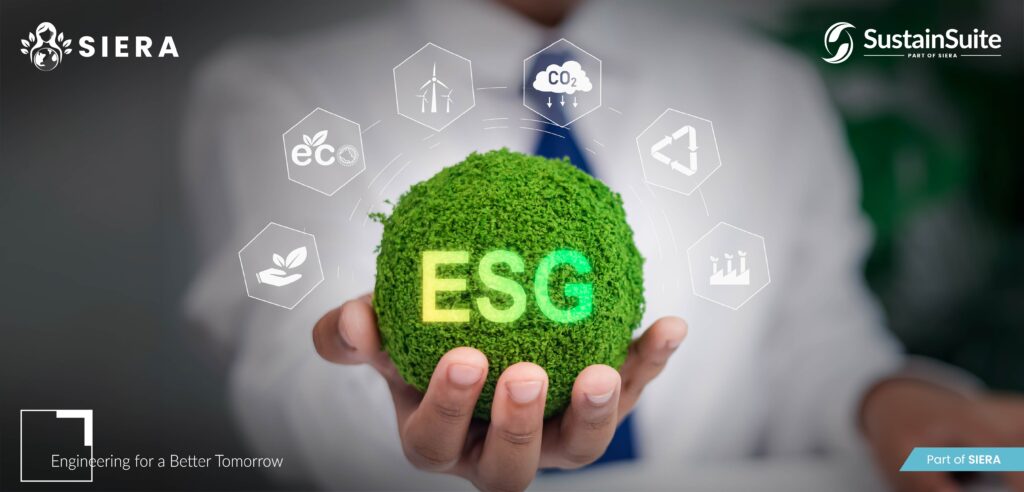
As EU sustainability regulations rapidly evolve, organizations are under growing pressure to align ESG reporting with decarbonization strategies while ensuring regulatory compliance. Fragmented data systems, complex reporting frameworks, and limited internal ESG expertise continue to challenge businesses across sectors. Addressing these issues requires more than compliance—it demands a unified, technology-driven approach. This is where EUTECH – powered by SIERA enables organizations to transform ESG reporting into a strategic advantage.
What Is Unified ESG & Environmental Reporting?
Unified ESG & Environmental Reporting refers to a single, integrated framework that consolidates environmental, social, and governance data into one transparent, traceable system aligned with EU regulations.
By 2026, nearly 50,000 EU companies and more than 10,000 non-EU organizations will fall under the scope of the Corporate Sustainability Reporting Directive (CSRD). In this context, unified ESG reporting replaces fragmented disclosures with one consistent, audit-ready reporting structure aligned with ESRS, EU Taxonomy, and VSME standards.
Why Unified ESG Reporting Matters for EU Compliance
Unified ESG reporting is not only about meeting regulatory requirements—it is a critical enabler of long-term sustainability and resilience.
Key Benefits:
Regulatory Compliance & Risk Management
Ensures alignment with CSRD and ESRS while reducing compliance and reputational risks.
Accelerated Decarbonization
Integrates carbon, energy, and waste data directly into business and financial decision-making.
Improved Data Quality & Transparency
Creates a single source of truth, improving data accuracy, traceability, and investor confidence.
Access to Capital & Competitive Advantage
Strengthens sustainability credentials, enabling access to green finance and strategic partnerships.
Key Challenges in ESG Reporting Today
Despite regulatory momentum, organizations continue to face systemic challenges that slow down ESG integration.
1. Fragmented ESG Data and Inconsistent Reporting
More than 40–50% of organizations struggle to integrate ESG and carbon data across internal and external systems. Manual spreadsheets, disconnected platforms, and duplicated datasets result in:
Incomplete Scope 1–3 emissions tracking
Inconsistent disclosures across reports
Higher error rates and longer reporting cycles
Limited visibility into ESG performance
2. Regulatory Complexity and Compliance Burden
EU sustainability regulations require companies to map hundreds of KPIs and sub-indicators across environmental, social, and governance dimensions. Constant updates to CSRD, ESRS, and EU Taxonomy frameworks create:
High administrative burden
Increased non-compliance risk
Regulatory fatigue across teams
Difficulty aligning financial and sustainability impacts
3. Lack of Internal ESG Expertise
Only 27% of EU companies report having dedicated ESG or sustainability analytics teams. Many organizations rely heavily on external consultants, leading to:
Higher long-term costs
Limited internal capability building
Delays in strategic ESG integration
Weak linkage between ESG data, governance, and risk management
Unified ESG Reporting: Challenges and Solutions
Solution 1: Integrated ESG Data Hub
An integrated ESG data hub centralizes environmental, social, and governance data across all business functions.
Key Capabilities
Centralized ESG and carbon data management
Real-time dashboards linking ESG and financial KPIs
Automated data validation and audit trails
ESRS-aligned reporting outputs
Business Impact
65% improvement in data accuracy and traceability
40% faster reporting cycles
Single source of truth for ESG disclosures
Solution 2: Data-Driven Compliance Module
A structured, automated compliance module transforms ESG reporting from a regulatory obligation into a strategic tool.
Core Features
Structured data collection for CSRD reporting
Automated ESRS mapping across E, S, and G dimensions
Clear ownership and validation workflows
Export-ready ESRS-compliant report sections
This approach reduces reporting effort, ensures regulatory alignment, and strengthens sustainability transparency.
By embedding ESG into core business processes, sustainability becomes a driver of value—not just a reporting requirement.
How EUTECH Supports Unified ESG Reporting
Through advanced ESG technology, compliance expertise, and system integration, organizations can be supported across:
ESG data integration and governance
CSRD and ESRS reporting readiness
Decarbonization and carbon management
ESG risk management and strategy alignment
This integrated approach enables companies to move beyond compliance and embed sustainability into long-term decision-making—true to the SIERA Alliance vision of “Engineering For A Better Tomorrow.”
Conclusion: From Compliance to Competitive Advantage
Unified ESG reporting is no longer optional. As EU regulations expand and stakeholder expectations rise, organizations must adopt integrated, data-driven ESG frameworks. By unifying ESG and environmental reporting, companies can meet regulatory requirements, accelerate decarbonization, and strengthen long-term resilience.
Ready to transform ESG reporting into a strategic advantage?
Discover how EUTECH – powered by SIERA can help your organization achieve EU-ready ESG compliance and decarbonization.
👉 Contact EUTECH to start your unified ESG reporting journey today.

 EN
EN  DE
DE